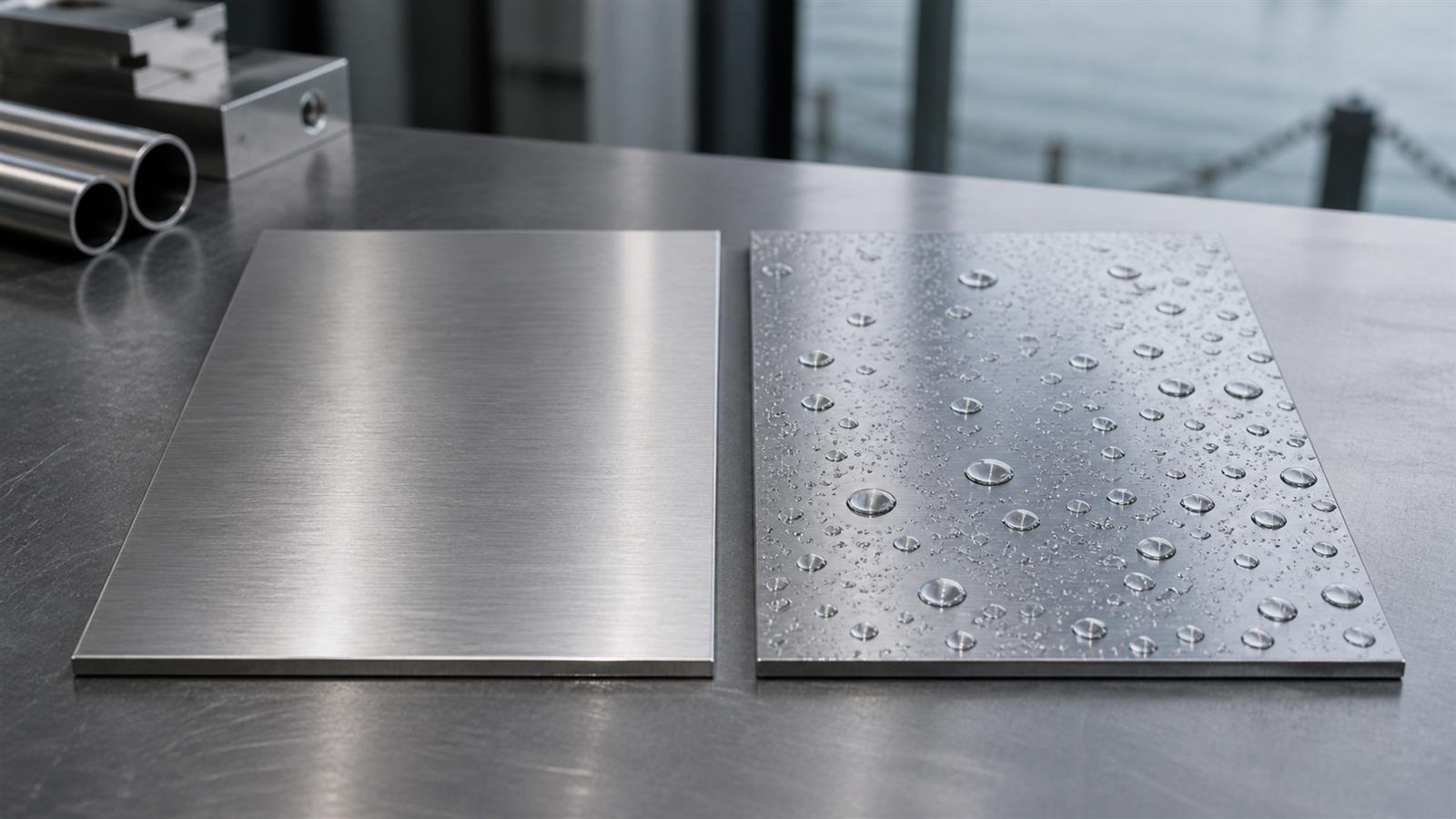
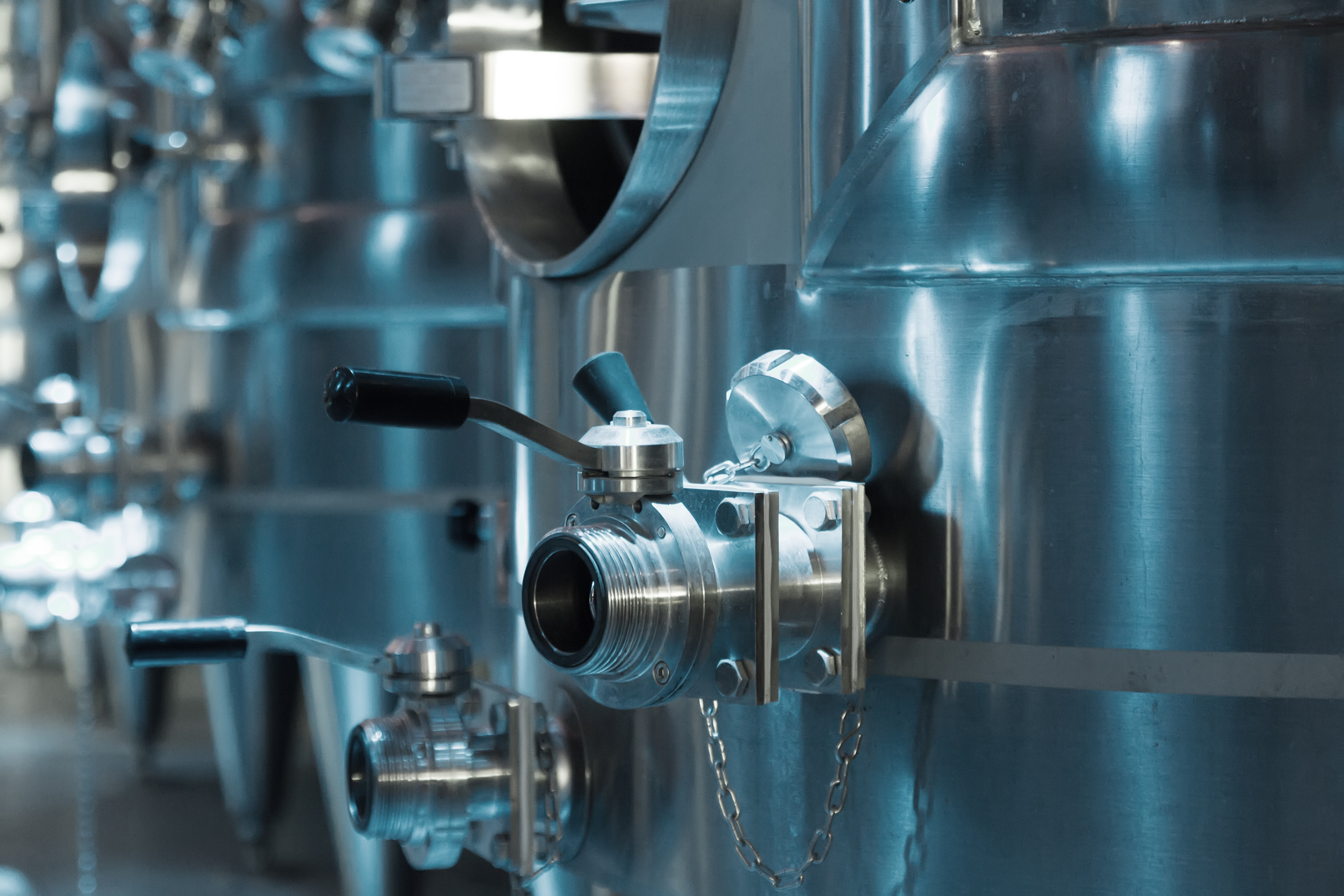
Choose 304 when the part will stay dry, indoor, and easy to inspect. Choose 316L when chloride is part of the real service life: coastal air, washdown, food acids, chlorinated cleaners, process water, or marine adjacency.
The difference is not that 316L is "better stainless" in every situation. It is that 316L carries molybdenum, and molybdenum gives the passive film more margin when chloride starts working into joints, scratches, welds, and unwashed corners. If the service is mild, 304 is still the honest choice. If the service is chloride-bearing, the premium becomes much easier to defend.
If the conversation has already moved into warm seawater, immersion, or stress corrosion cracking, stop comparing 304 and 316. That is usually the point where 2205 duplex enters the decision.
What Actually Changes the Decision?
Most 304/316 debates get stuck in a chemistry table. The useful part is smaller: molybdenum, nickel, carbon level, and whether the part will be welded.
| Decision point |
304 / 304L |
316 / 316L |
What it changes |
| Molybdenum |
None |
2.00–3.00% |
Main reason 316L handles chloride better |
| Nickel |
8.0–12.0% |
10.0–14.0% |
Adds cost and stabilizes the austenitic structure |
| Chromium |
18.0–20.0% |
16.0–18.0% |
Higher Cr in 304 does not offset 316L's Mo advantage |
| Low-carbon option |
304L, C ≤ 0.030% |
316L, C ≤ 0.030% |
Safer for welded structures and heat-affected zones |
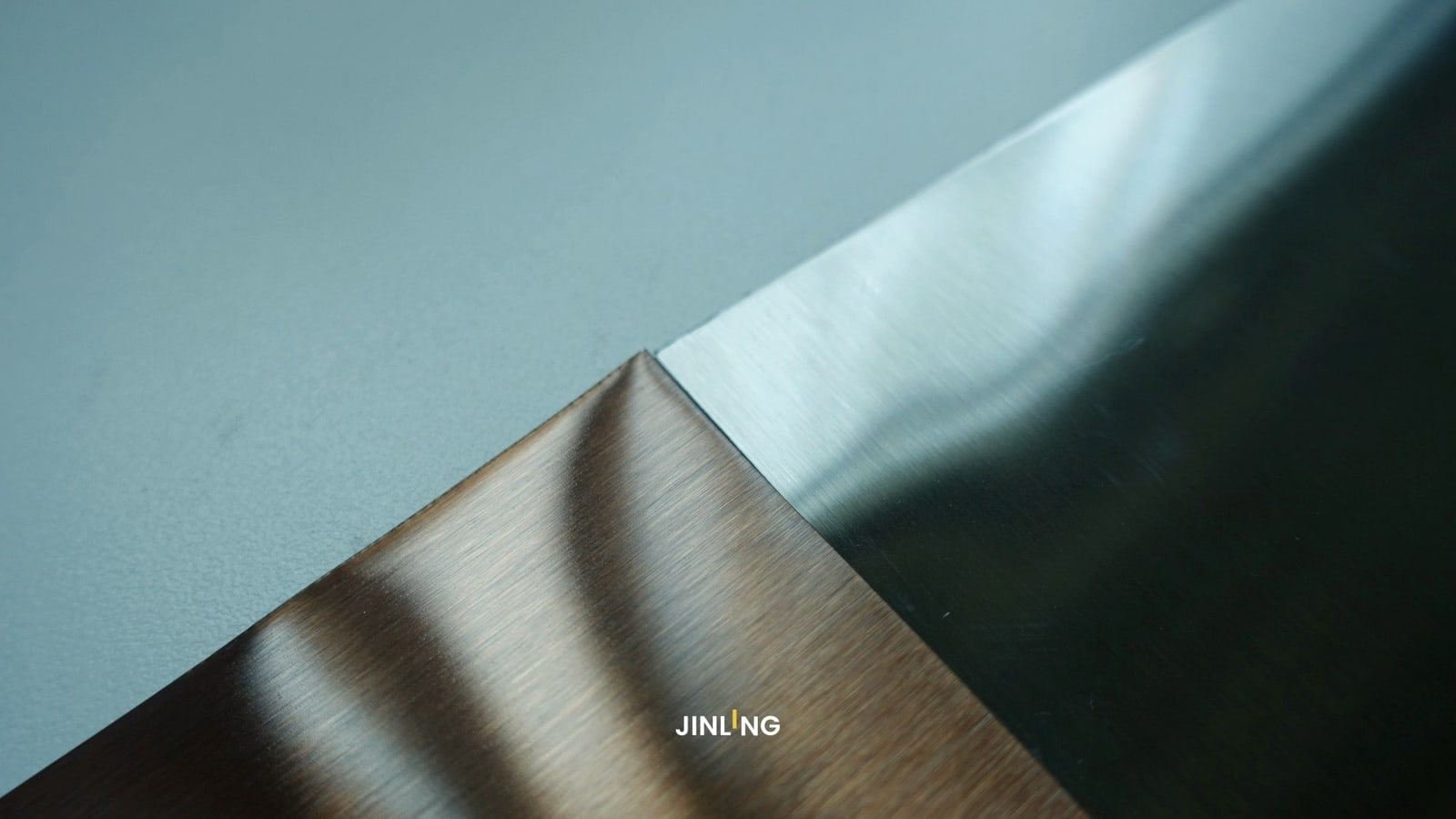
In annealed sheet and plate, the mechanical properties are close enough that they rarely decide the grade. Environment decides it. Then welding, inspection access, and replacement cost confirm it.
For purchasing, write the standard and the exact grade: ASTM A240 316L, EN 1.4404, or the agreed dual-certified equivalent. A PO that says only "stainless steel" leaves too much room for interpretation.
Where Does Chloride Move the Answer?
PREN is a quick way to understand the corrosion gap:
304 normally sits around PREN 19. 316L sits around PREN 24–26. That does not make 316L immune to chloride; it gives it a wider window before pitting and crevice corrosion become likely.
| Service window |
Safer starting grade |
Read this as |
| Dry indoor, no chloride cleaning |
304 / 304L |
Cost-effective and technically sound |
| Freshwater or mild indoor washdown |
304L or 316L |
Use 316L when inspection is difficult |
| Coastal air, acidic food, chlorinated cleaning |
316L |
304 may stain or pit early |
| Warm chloride, seawater splash, sustained brine |
2205 or higher |
316L may no longer be the conservative option |
The part that matters in the field is not the average chloride number. It is where chloride concentrates: under gaskets, behind labels, in brushed grain valleys, at weld discoloration, and at drainage points that never fully dry.
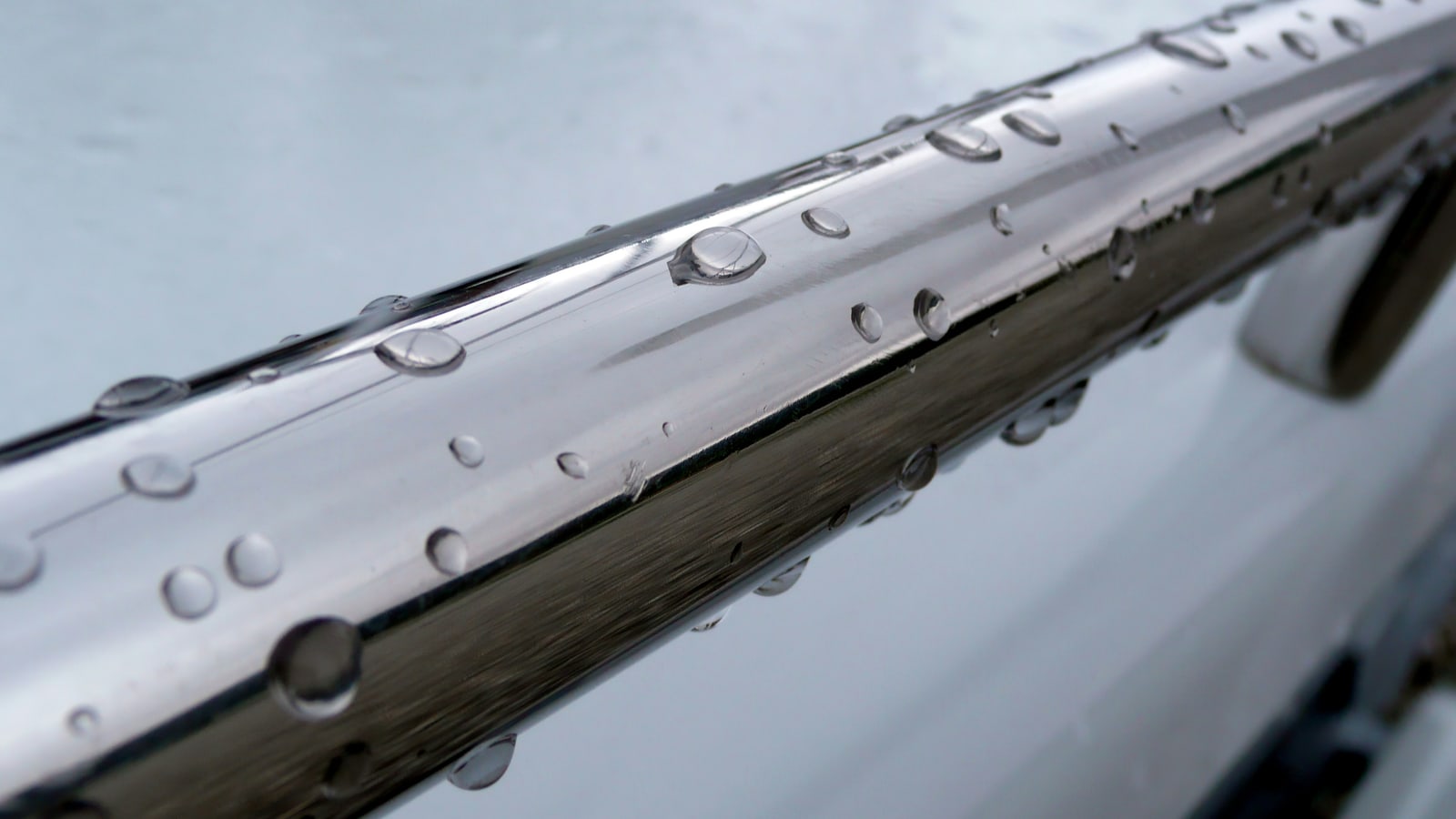
A typical failure pattern: 304 works on the sample table and even after fabrication, then tea-staining starts six months after installation because the surface sees a chlorinated cleaner every night. The alloy did not suddenly become defective. The service condition was stronger than the grade margin.
When Does 316L Pay for Itself?
316L often costs 30–50% more per tonne than 304 because molybdenum and nickel carry real alloy cost. That premium is not automatically good value. It becomes good value when the alternative is repair, re-polishing, replacement, downtime, or visible staining on a part the customer looks at every day.
The upgrade usually pays in three cases:
- The surface will see chloride regularly, even if only through cleaning.
- The part is welded and the weld zone will stay wet or dirty.
- Replacement access is expensive: tanks, installed panels, coastal railings, process equipment, or export projects where complaints travel slowly and cost heavily.
If the part is a dry indoor bracket, 304 is not a compromise. If it is a coastal kitchen hood, a dairy component, or a tank with chlorinated washdown, 316L is not "premium"; it is the more realistic baseline.
What About Welding?
For welded work, use the low-carbon grade unless the design has a specific reason not to.
During welding, carbon can combine with chromium at grain boundaries in the heat-affected zone. That leaves nearby metal poorer in chromium and more vulnerable to intergranular corrosion. The "L" grades, with carbon at or below 0.030%, reduce that risk.
Practical filler choices are straightforward:
- 304 / 304L usually uses ER308L or E308L.
- 316 / 316L usually uses ER316L or E316L.
- 304-to-316 or stainless-to-carbon-steel transitions usually need a 309L-type filler.
The weld procedure still matters. A clean low-carbon grade can be spoiled by poor shielding, heavy heat tint, or no pickling/passivation after fabrication. Welding parameters should be checked separately during project review rather than being folded into this grade comparison.
Which Grade Fits Which Application?
304 is a good fit for indoor food equipment, general kitchen equipment, freshwater fixtures, architectural trim away from chloride, and fabrication where the surface stays clean and dry. It is also the usual starting point for No.4 brushed, hairline, and many general-purpose cold-rolled sheets.
316L is the safer fit for coastal architecture, acidic food processing, pharmaceutical equipment, marine-adjacent fittings, chemical storage, and welded assemblies that will see cleaning chemicals or chloride-bearing water.
In the gray zone, ask two questions before approving 304:
- Will chloride touch the surface repeatedly?
- If staining appears later, will repair be easy and cheap?
If either answer is uncomfortable, quote 316L. It is better to have that discussion before the order than after the panels are installed.
International Grade Equivalence
Use equivalence tables to align documentation, not to loosen the specification. Standards overlap, but they are not always word-for-word identical.
| Order language |
Common equivalents |
Note |
| ASTM 304 / UNS S30400 |
EN 1.4301, JIS SUS304, GB 06Cr19Ni10 |
General 18-8 stainless |
| ASTM 304L / UNS S30403 |
EN 1.4307, JIS SUS304L, GB 022Cr19Ni10 |
Low carbon for welded work |
| ASTM 316 / UNS S31600 |
EN 1.4401, JIS SUS316, GB 06Cr17Ni12Mo2 |
Mo-bearing austenitic grade |
| ASTM 316L / UNS S31603 |
EN 1.4404, JIS SUS316L, GB 022Cr17Ni12Mo2 |
Low-carbon 316 for welded or corrosion-sensitive work |
For cross-border orders, specify both the standard and the grade, then verify the Mill Test Certificate against the PO. For documentation checks, start with how to read a mill test certificate.
Selection Shortcut
Use 304 when the environment is mild, inspection is easy, and the cost of future staining is low. Use 316L when chloride, acidity, coastal atmosphere, or difficult maintenance is part of the real service life. Use the L-grade for welded structures unless there is a controlled reason not to.
And if the service is already hot chloride, seawater immersion, or SCC-prone, do not spend too long between 304 and 316. Move the decision up one level and compare 316L with duplex.
What We See on Project Quotes
The pattern is familiar: the drawing says 304 because the first budget was written indoors, but the equipment will live near the coast or be cleaned with chlorinated chemistry. We push back on those 304 requests because the alloy premium is visible at purchase, while the remediation cost appears later and usually lands on the buyer with far less patience.
There are also cases where we do not push the upgrade. Dry interior trim, easy replacement parts, and non-critical decorative components can be 304 without apology. Good grade selection is not always the more expensive grade. It is the grade whose risk matches the service.