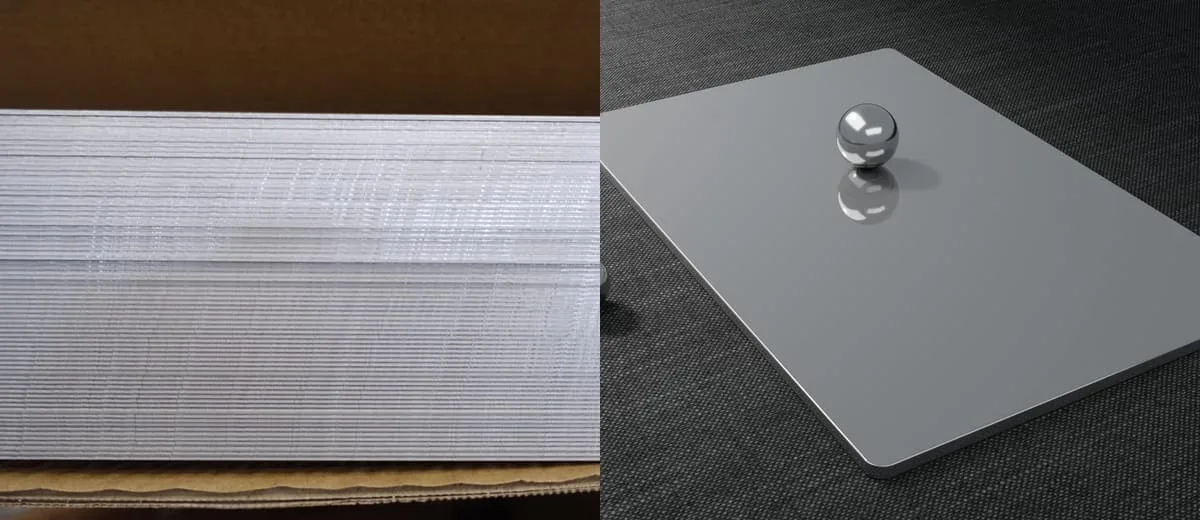
2B is the working mill finish: smooth, economical, widely available, and ready for fabrication or later grinding. BA is the brighter finish: lower roughness, cleaner reflection, better for visible appliance panels, premium interior work, and some hygienic surfaces where Ra control matters.
Both are cold-rolled stainless finishes. Both weld and form like the same base grade. The choice is not about strength. It is about appearance, cleanability, handling risk, and whether the project needs the surface as delivered or will grind/polish it again.
The Real Difference
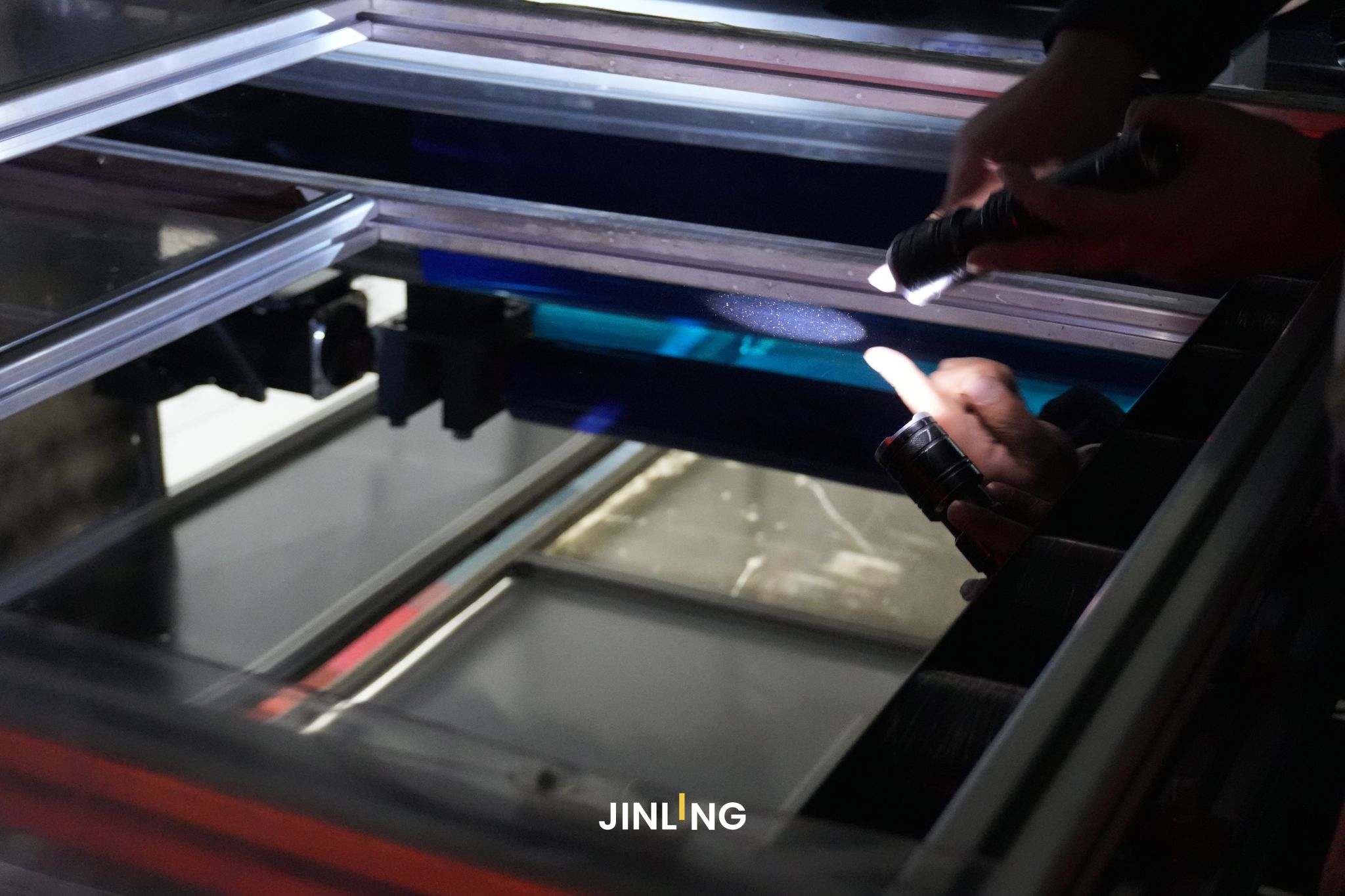
2B is annealed in air, pickled to remove oxide scale, then skin-pass rolled. BA is bright-annealed in a protective hydrogen or hydrogen-nitrogen atmosphere, so the surface never forms the same oxide scale and does not need acid pickling afterward.
| Decision point |
2B |
BA |
| Typical Ra |
0.1–0.5 µm |
0.05–0.1 µm |
| Appearance |
Smooth grey-silver, semi-reflective |
Brighter, cleaner, more reflective |
| Availability |
Broad grades, widths, gauges |
More limited by mill and width |
| Handling |
More forgiving |
Shows scratches and fingerprints faster |
| Cost |
Baseline |
Usually higher |
| Best role |
Functional surface or polishing substrate |
Premium visible surface or low-Ra substrate |
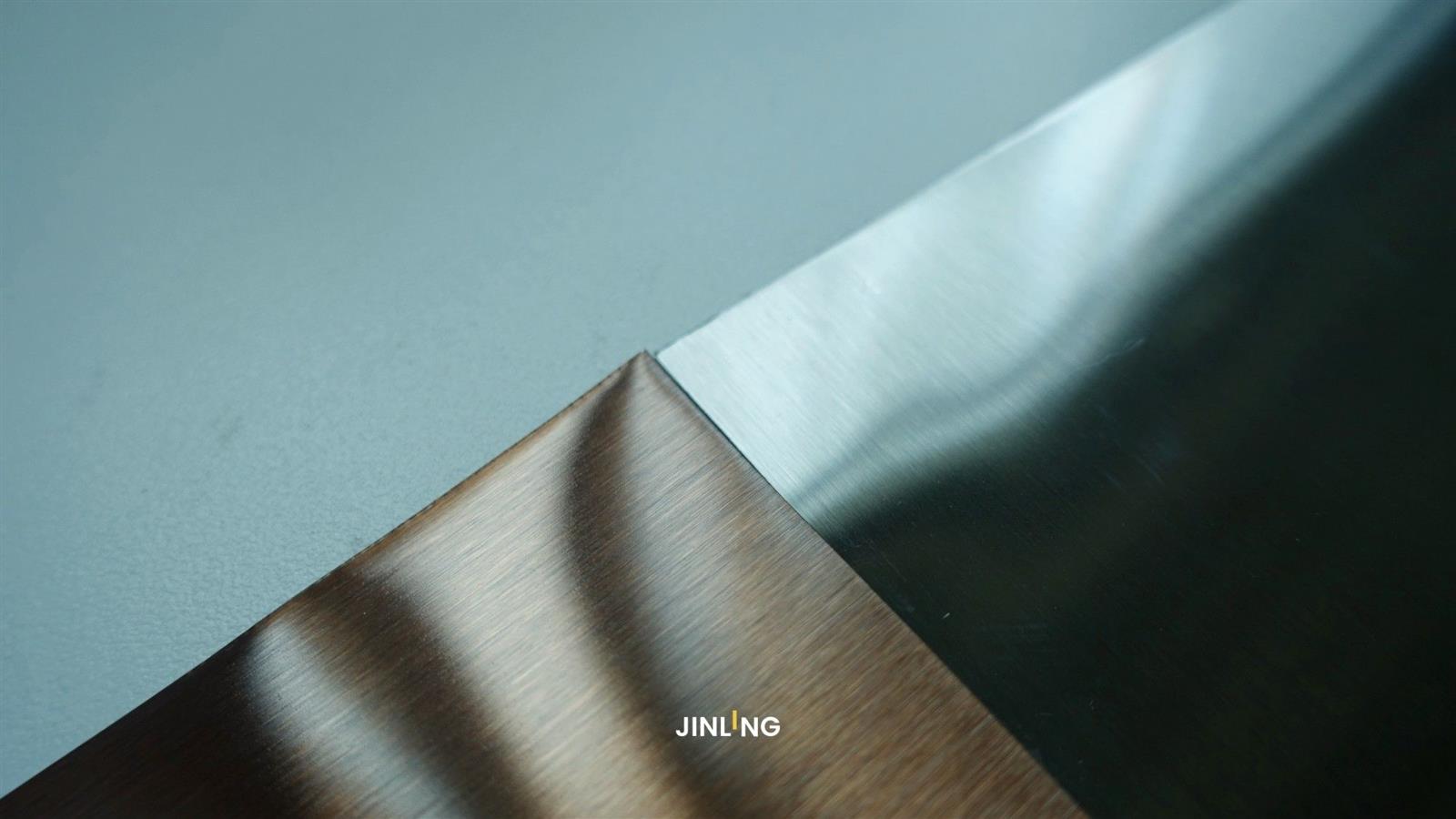
The important detail: BA is bright, but it is not mirror. If the client expects clear reflection, the finish is 8K mirror, not BA.
When 2B Is the Better Choice
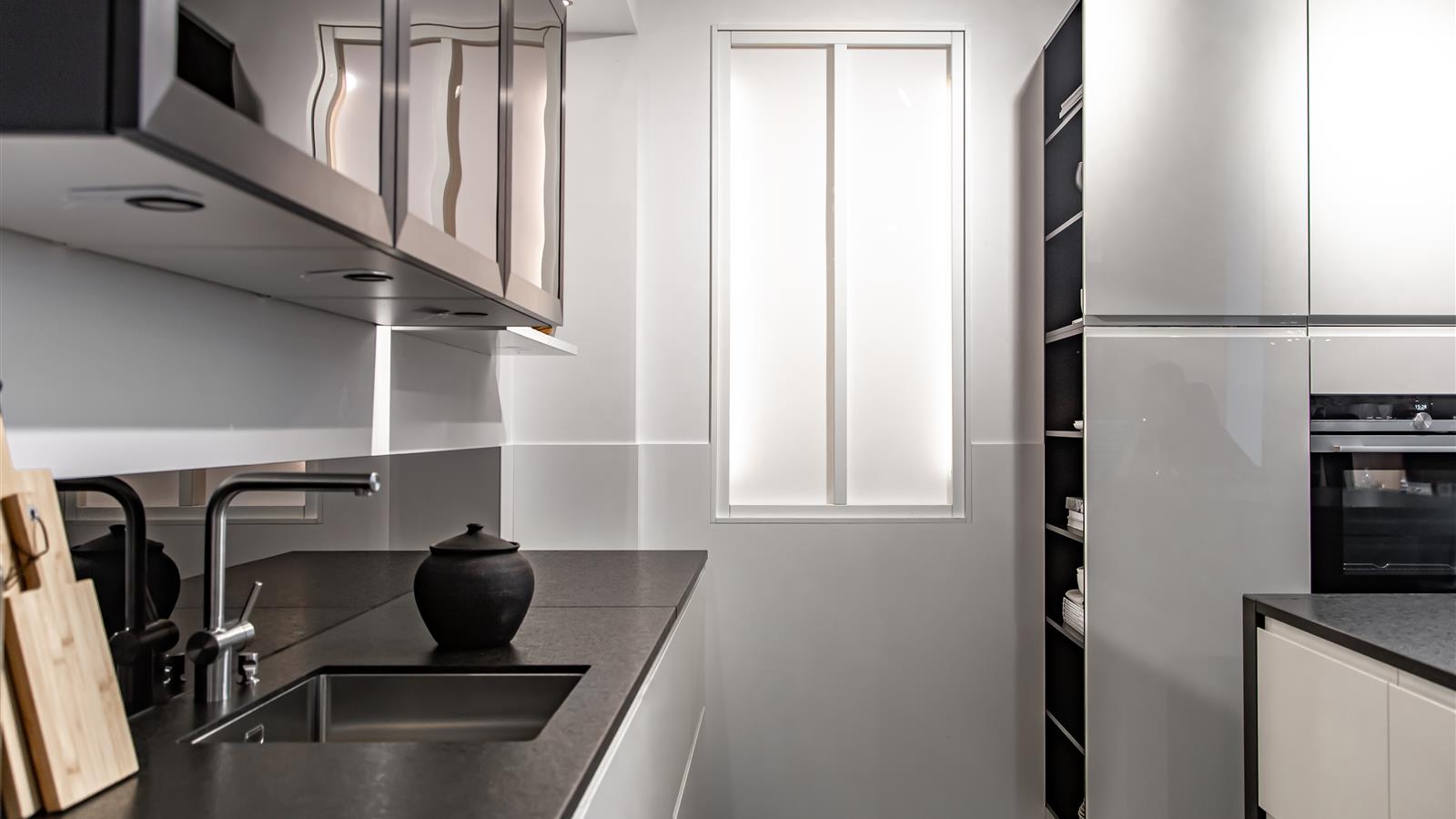
Choose 2B when the surface needs to perform, not impress. It is the practical default for tanks, general kitchen equipment, fabrication-bound sheet, HVAC work, industrial panels, and parts that will later be brushed, hairlined, or painted.
2B is also the safer commercial choice when the route includes heavy fabrication. It tolerates normal handling better than BA, hides minor marks more easily, and is easier to source in mixed thicknesses and widths.
| Project situation |
Why 2B usually wins |
Watch point |
| General fabrication |
Available, economical, predictable |
Specify PE film if surface still matters |
| Base for No.4 or hairline |
No need to pay for a brighter substrate |
Confirm polishing allowance |
| Industrial tanks or vessels |
Functional cleanability at lower cost |
Use Ra limit if hygiene matters |
| Hidden or back-of-house panels |
Appearance demand is modest |
Do not over-specify BA by habit |
If the final surface will be No.4 brushed, hairline, or another mechanical finish, 2B is often the most sensible starting point.
When BA Is Worth Paying For
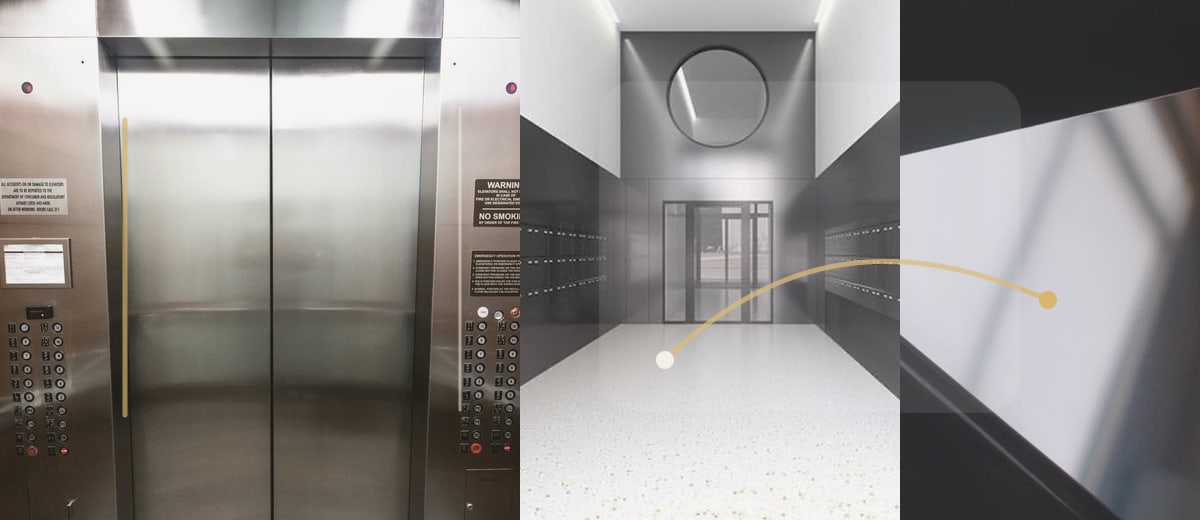
Choose BA when the delivered surface itself carries value: appliance fronts, elevator interiors, bright trim, cleanroom-facing panels, premium indoor decoration, and substrates that will move toward mirror with fewer polishing steps.
BA's lower Ra also helps cleanability. That does not mean BA replaces grade selection; a BA 304 surface is still 304. But in mild service, the smoother surface collects less residue and is easier to wipe clean.
| Project situation |
Why BA helps |
Watch point |
| Appliance and bright decorative panels |
Better first impression under showroom light |
Protect film and handling route matter |
| Premium elevator interiors |
Cleaner reflection than 2B without full mirror cost |
Fingerprints may need AFP coating |
| Hygienic surfaces with Ra control |
Lower starting roughness |
Write the required Ra into the PO |
| Base for mirror polishing |
Fewer polishing stages than rougher substrate |
Still not a finished mirror |
For AFP-coated appliance work, BA is often chosen for the visual base and AFP handles fingerprints. For budget-sensitive work, 2B plus AFP can still be acceptable if the brand does not need the brighter read.
Does Finish Change Corrosion Resistance?
Finish does not change the alloy chemistry, but it can change where corrosion starts. Smoother surfaces hold less dirt, less chloride, and fewer wet deposits. That is why Ra matters in borderline service.
| Surface condition |
Corrosion reading |
| Rough, scaled, or poorly cleaned |
More places for moisture and chloride to sit |
| Standard 2B |
Good baseline for mild service |
| BA |
Slightly better surface cleanliness and lower deposit retention |
| Electropolished |
Highest cleanability and passive-film quality for critical service |
Do not use surface finish as a substitute for the wrong grade. If chloride demand requires 316L or duplex, BA on 304 is not a magic workaround. But when the environment is mild and the finish is visible or frequently cleaned, the smoother surface can reduce maintenance friction.
Borderline Cases
Some projects sit between the two finishes. These are the calls worth discussing before the PO is released.
Bright but not mirror. BA is a good answer when the client wants a cleaner, brighter mill finish but does not require true mirror reflection. If the word "mirror" appears in the brief, verify whether they mean BA brightness or actual 8K.
Polishing afterward. BA can reduce polishing labor when the final finish is high gloss or 8K. For ordinary No.4 or hairline, 2B usually remains the economical substrate.
Hygienic work. BA's lower Ra helps, but the specification should name the Ra limit and inspection method. "BA" alone is not a sanitary guarantee.
Visible panels with fingerprints. BA shows marks more clearly. If the panel will be touched often, consider AFP coating or a brushed finish that hides handling better.
How to Specify 2B or BA
A finish specification should remove ambiguity from both the mill and the fabricator. At minimum, write the finish, grade, inspection face, protective film, and any Ra requirement.
Material: ASTM A240 304L stainless steel sheet
Finish: BA, one-side prime surface
Roughness: Ra ≤ 0.10 µm on visible face
Protection: PE film on visible face
Inspection: visual surface inspection before packing
For 2B, the same structure applies. If surface roughness is not critical, do not invent an overly tight Ra number. If it is critical, make the measurement method part of the order.
Common mistakes:
- Saying "mirror" when the project only needs BA brightness.
- Forgetting protective film on BA.
- Choosing BA for a part that will be heavily fabricated and then brushed anyway.
- Assuming every mill's BA has the same reflection and handling tolerance.
Finish-Selection Shortcut
Use 2B when the surface is functional, will be fabricated heavily, or will be processed into another finish. Use BA when brightness, lower Ra, premium appearance, or mirror-polish efficiency justifies the extra cost and stricter handling.
If the buyer is deciding by sample, show the sample under real installation lighting. BA can look excellent in a clean room and too mark-sensitive in a busy lobby. 2B can look modest on the desk and perfectly correct once it becomes a working panel.
How We Stock It
Our default inventory tilts toward 2B for general sheet and fabrication work because it covers the widest range of orders without over-specifying the surface. BA is stocked more selectively for appliance, elevator, bright decorative, and mirror-polishing routes.
When the order says only "cold rolled stainless", we ask the surface question before production. The difference is too visible to leave to assumption.